
Water temperature has a huge impact on fauna and flora that live in freshwater ecosystems. That’s why a big part of our nature restoration work is focussed on keeping the river as cool as possible, helping to improve its resilience as the climate continues to change.
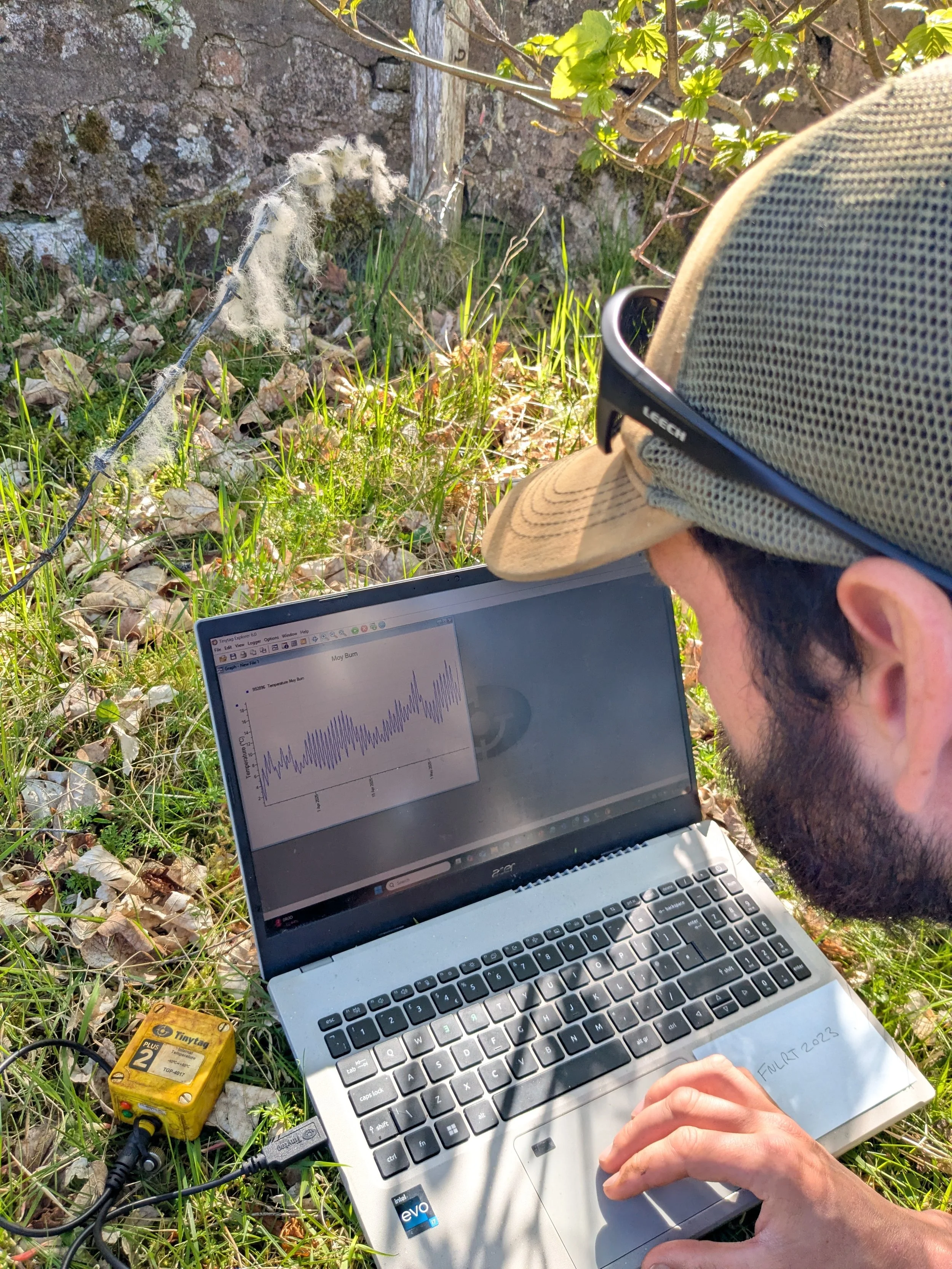
Ollie downloading water temperature records
Informing decision-making
To help inform our decisions about priority zones for nature restoration, we take regular temperature logs along the river. It also helps us to create a picture of how the catchment is being impacted by the changing climate.
Exposed, shallow areas are particularly vulnerable to warming, and it is possible for temperatures to rise levels that are detrimental for the cool-water loving species. These may, in turn, become areas that we prioritise for restoration.
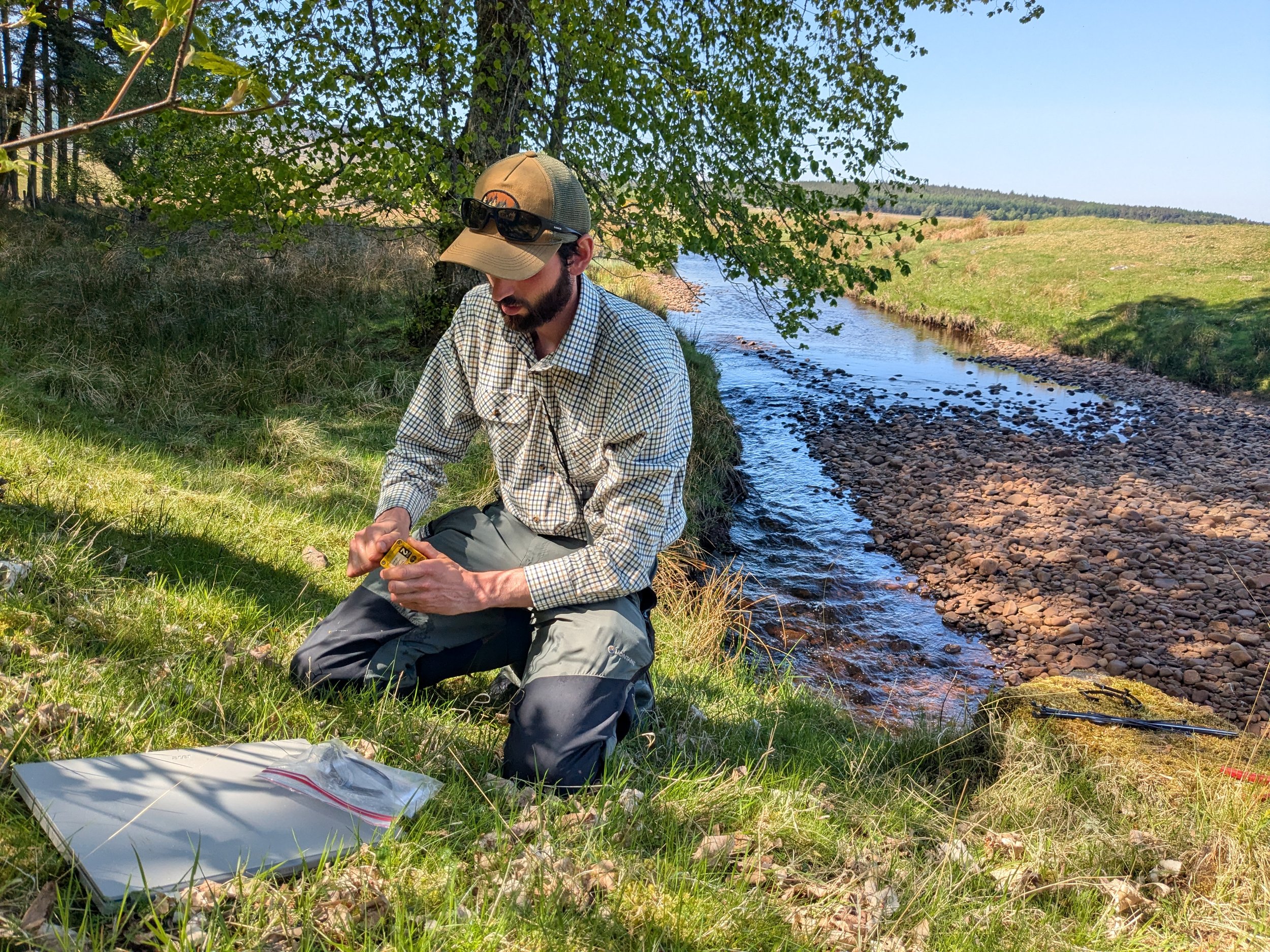
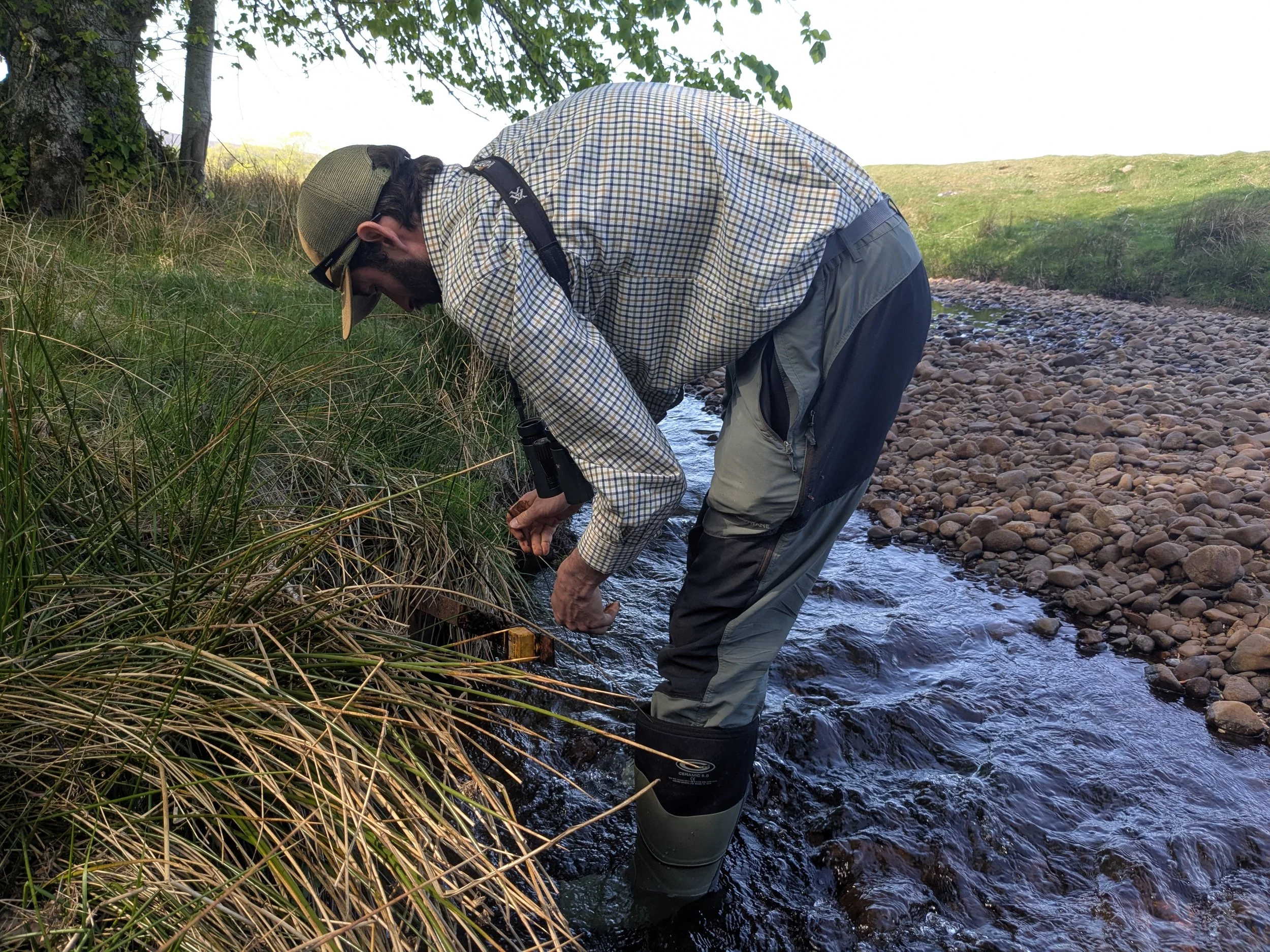
With the recent bout of warm, dry weather, some of our team, Guy (Catchment Restoration Lead) & Ollie (Ecologist), wanted to take some temperature logs to see how the river’s temperature had been impacted as a result. The area that Guy and Ollie wanted to test is a five mile long shallow stretch of river that is relatively uniform in depth, at around 5 inches deep. Our latest logs showed a temperature reading of 18 degrees Celsius.
Danger zone
Dangerous temperatures for salmon specifically start around 23 degrees Celsius, as their bodies will begin to shut down and they won’t move or feed. At temperatures beyond 33 degrees Celsius, it is unlikely that they would survive the exposure.
Looking forward to later in the summer, there is a concern that the water temperatures will continue to rise and we could potentially see these dangerous temperature levels. In ten to twenty years time, these temperatures could be the norm, especially throughout the warmer months of the year. This would make the river uninhabitable for salmon and other species.
The solution
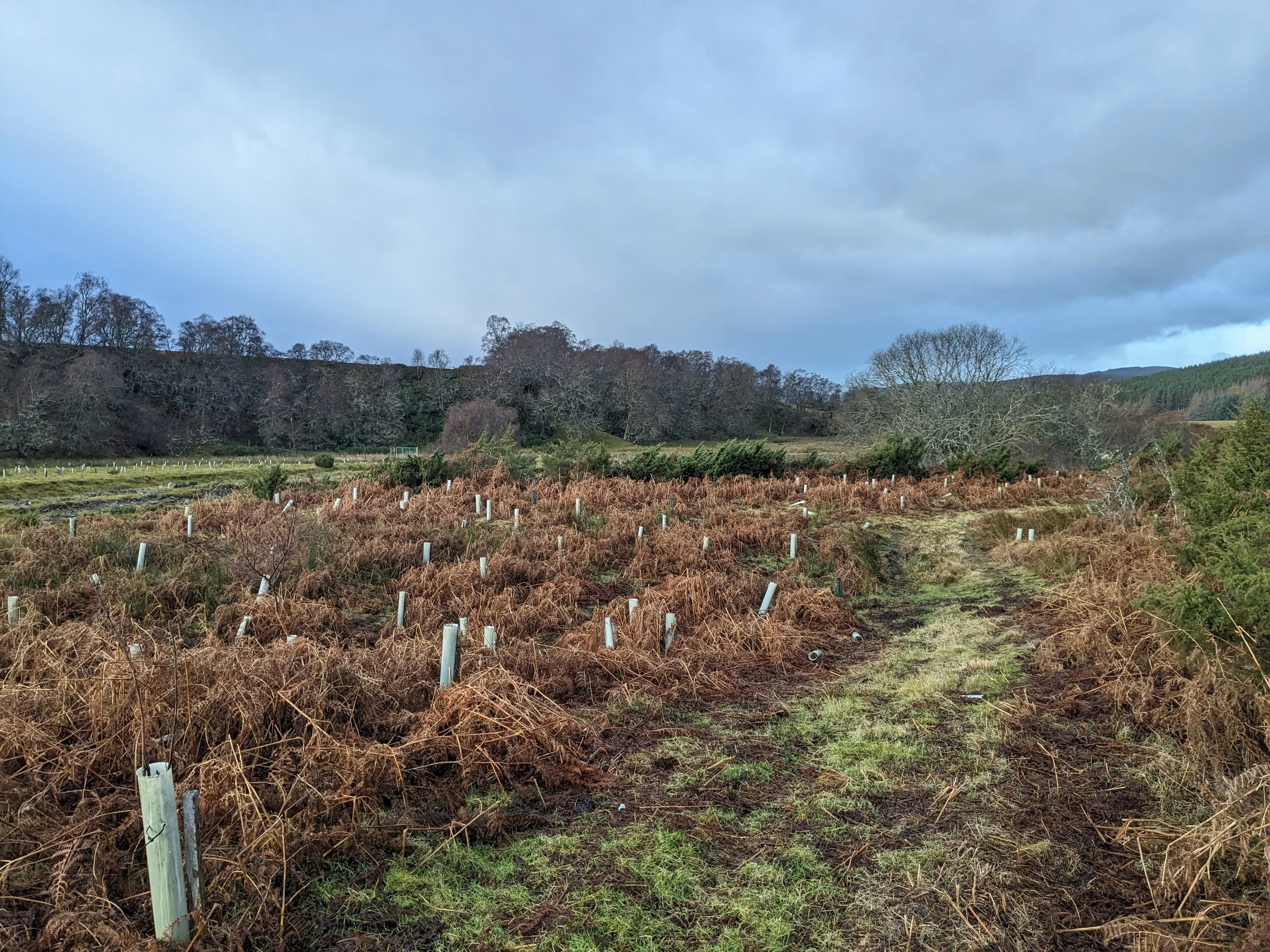
Woodlands along rivers (also known as ‘riparian’ woodlands) have numerous positive impacts on the ecosystem, such as adding nutrients, stablising banks, preventing erosion, flood mitigation, creating habitat, and reducing both sedimentation and water temperatures. Many stretches of the River Findhorn and its tributaries have lost their woodlands, meaning they have lost all of the wonderful benefits they bring.
We’ve already planted *** trees along the River Findhorn, and have big plans to continue. Without intervention, the future for our rivers and the species that live within them would be bleak. But thankfully there’s so much we can do to to save them, and the work has already begun!
If you would like to learn more about our nature recovery work, click here.
If you want to support the work of the Findhorn Watershed Initiative and the Findhorn, Nairn and Lossie Rivers Trust, click here.