
Spring invertebrate sampling
Guy Harris, our Catchment Restoration Lead, recently carried out the ‘baseline’ surveys for invertebrates at our key habitat restoration sites. It is referred to as ‘baseline’ data as it is the first invertebrate population information that we’ve collected from the River Findhorn, and it will be used a reference for any changes we observe from hereon in. It help us to identify current conditions and health across the watershed.
Training volunteers
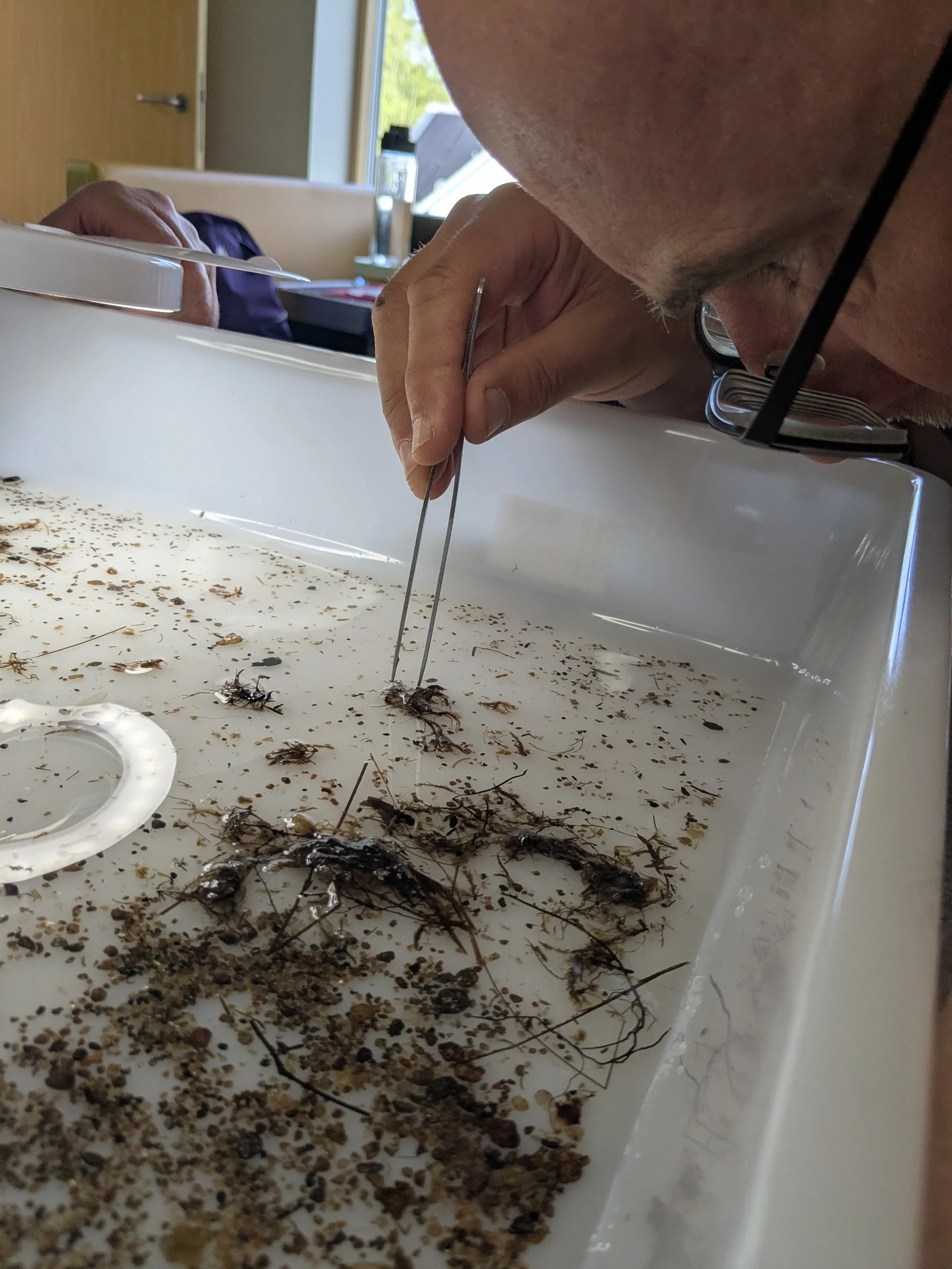
The samples we collected were then used in identification training with a group of volunteers, who will now be able to conduct bi-annual surveys. The information they collect from their local catchments will highlight any increased biodiversity or abundance occurring as a result of restoration activity, or decline from pressures on the system. The surveys will now be conducted twice a year - in spring and autumn* - to monitor population trends and inform our restoration efforts.
* The samples are done around these times as there will always be a difference in the species that are present based on the season.
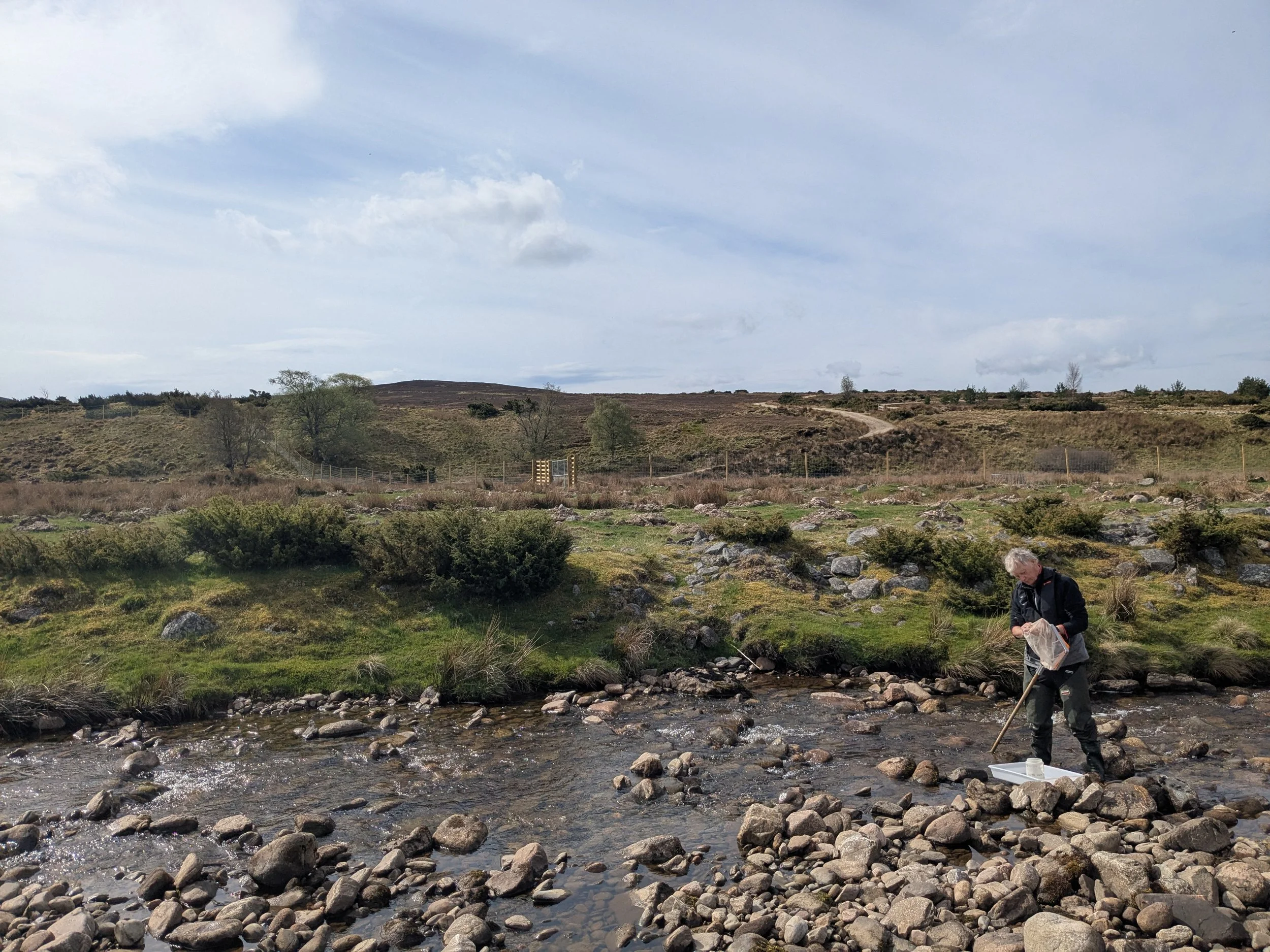
Volunteer sampling within one of our restoration sites
Repeated monitoring using SmartRivers methodology
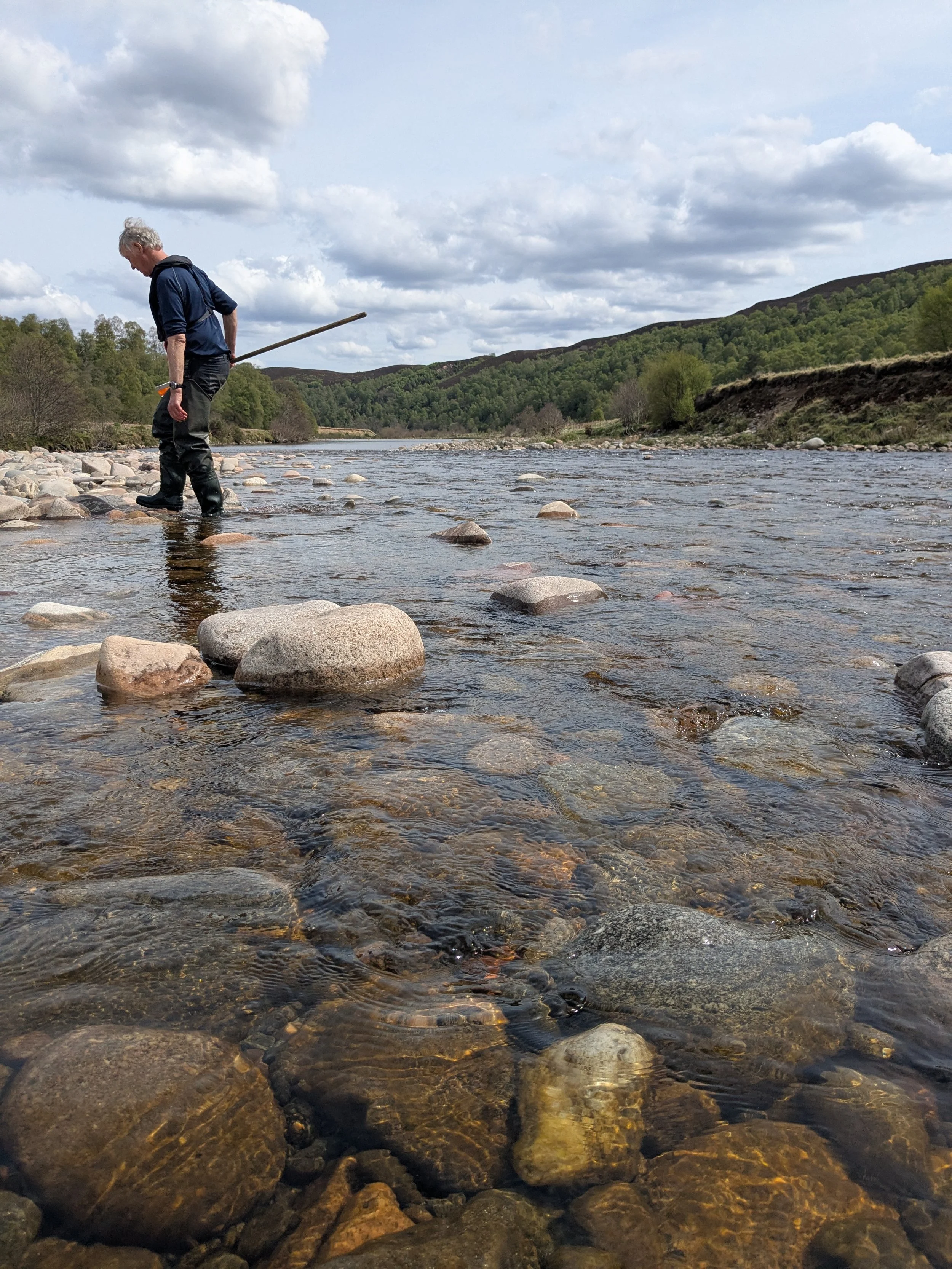
SmartRivers is an initiative of the charity WildFish - it is a scheme whereby repeated monitoring of invertebrate populations in rivers across the UK, using the same methodology. We have five SmartRivers sampling sites across the Findhorn Watershed (three in the upper catchment and two in the lower catchment). The repeated sampling provides long term data sets, giving scientists a big picture vision of river health.
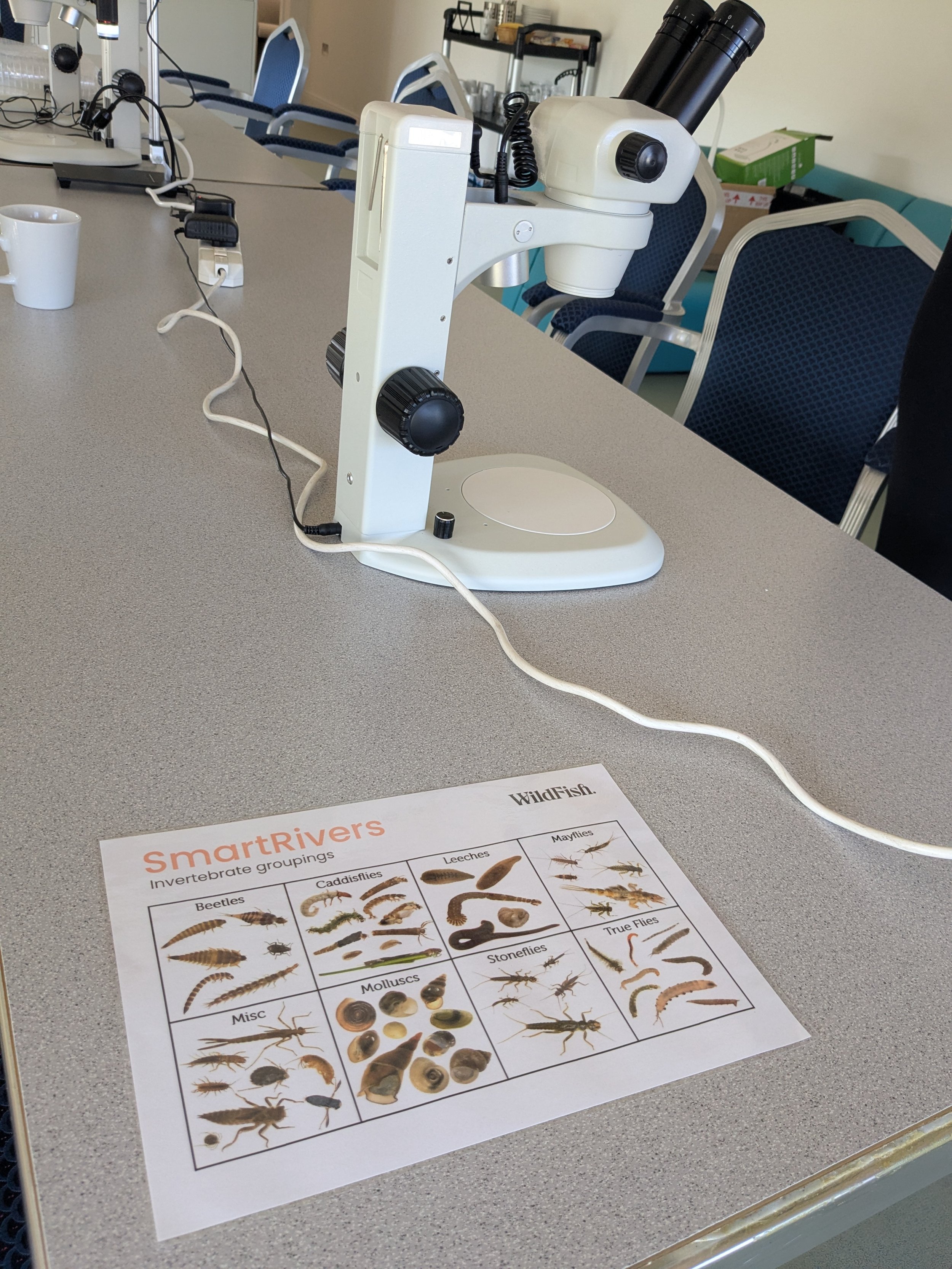
Once we performed the invertebrate sampling, we sent our data to WildFish. Their entomologist analysed the data, then sent us a list of the species that are present.
Informing future nature restoration efforts
Moving forward we can compare the data we collect year on year, with our volunteers and in-house, to see whether the health of the river has increased, been maintained or if there are any issues, based on which species are present.
The invertebrate species that are present in the samples will tell us whether our restoration efforts have improved the river ecosystem. They may also tell us if there are any negative processes occurring, such as sediment stress or chemical pollution, which could cause cause reduced population density or the absence of certain species.
By identifying key stressors we hope to be able to address issues quickly and efficiently with the support of landowners. By supporting the base of the food chain, it benefits numerous species and promotes the health of the wider river catchment.
Resilient rivers
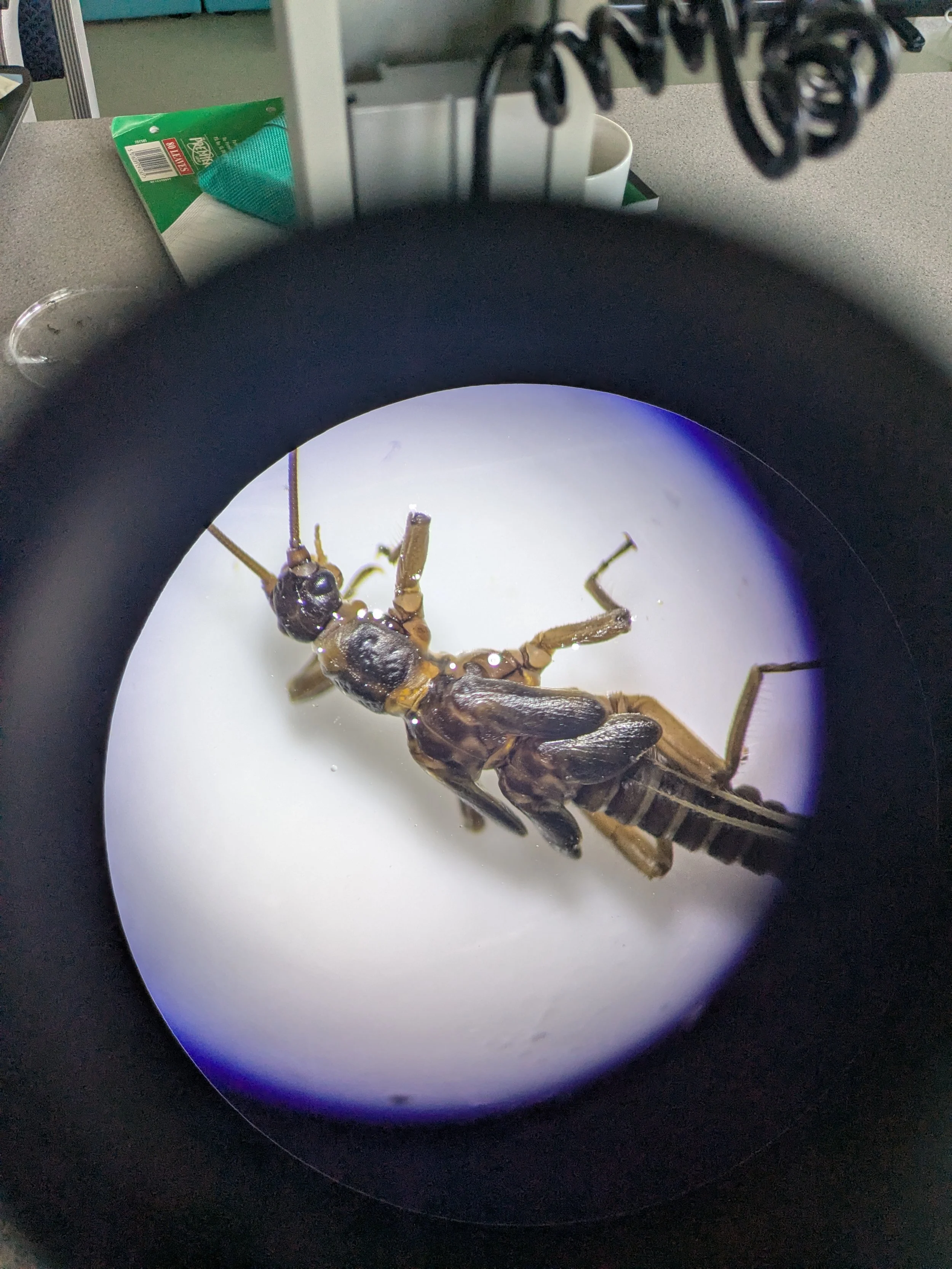
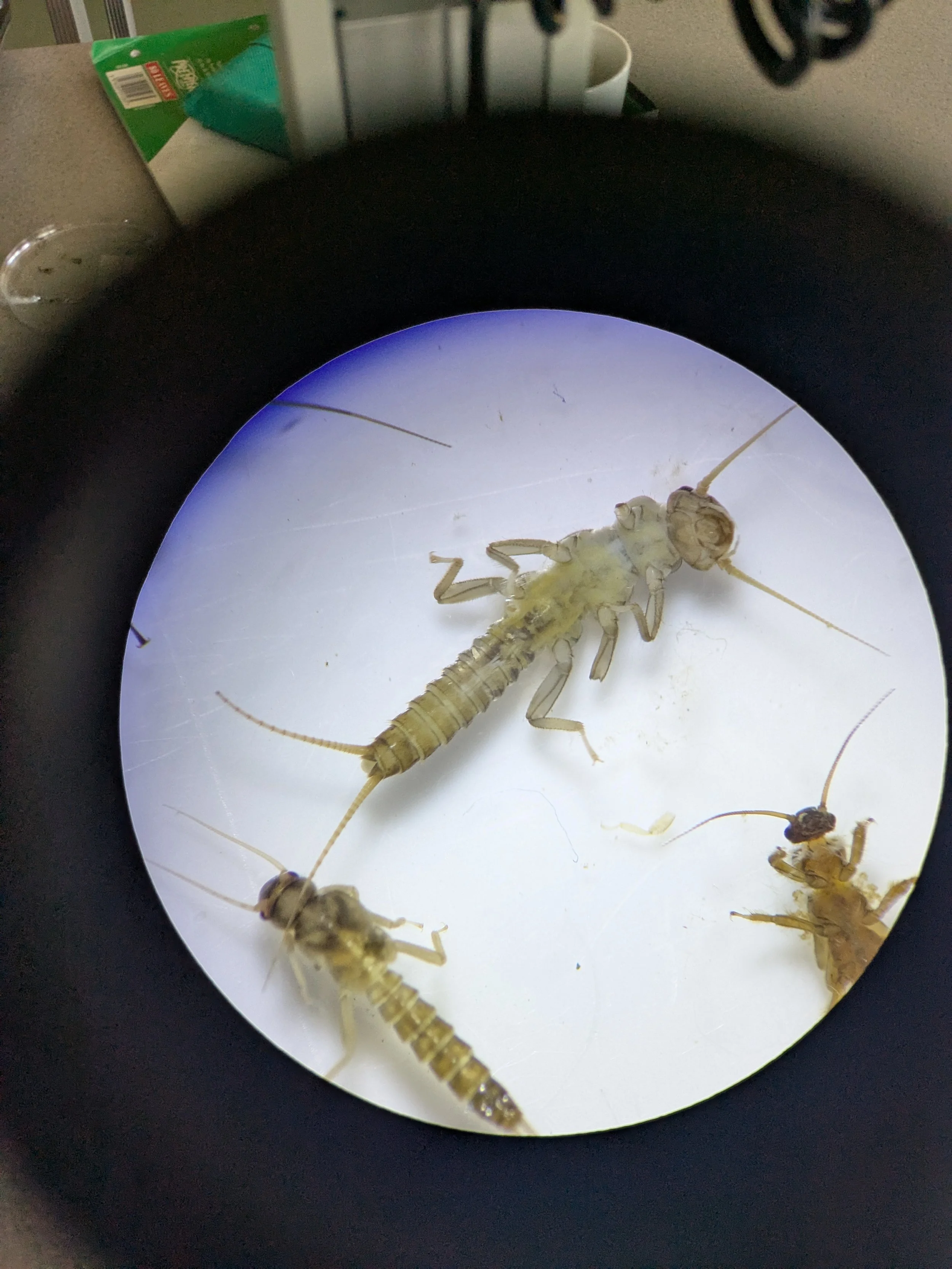
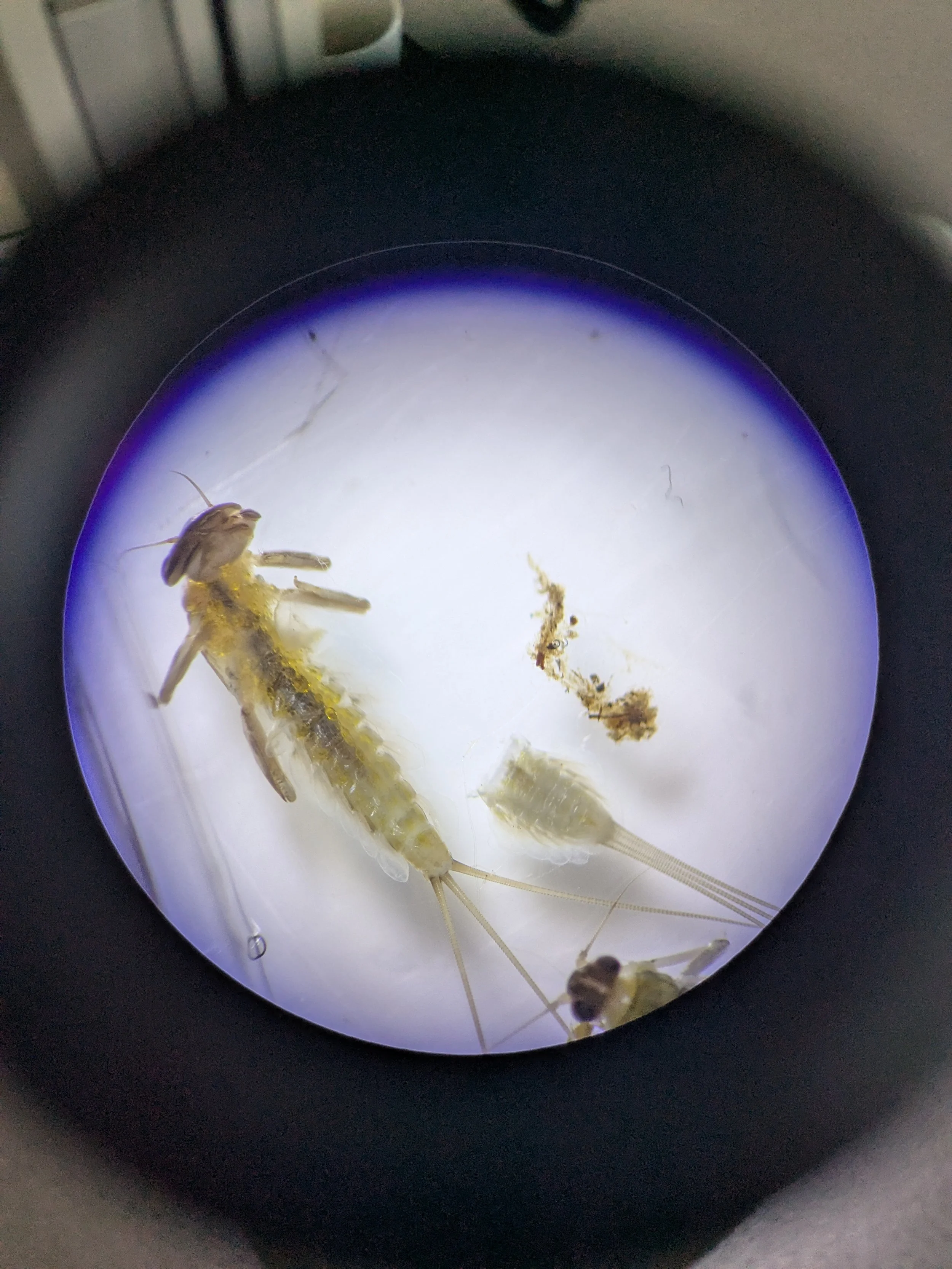
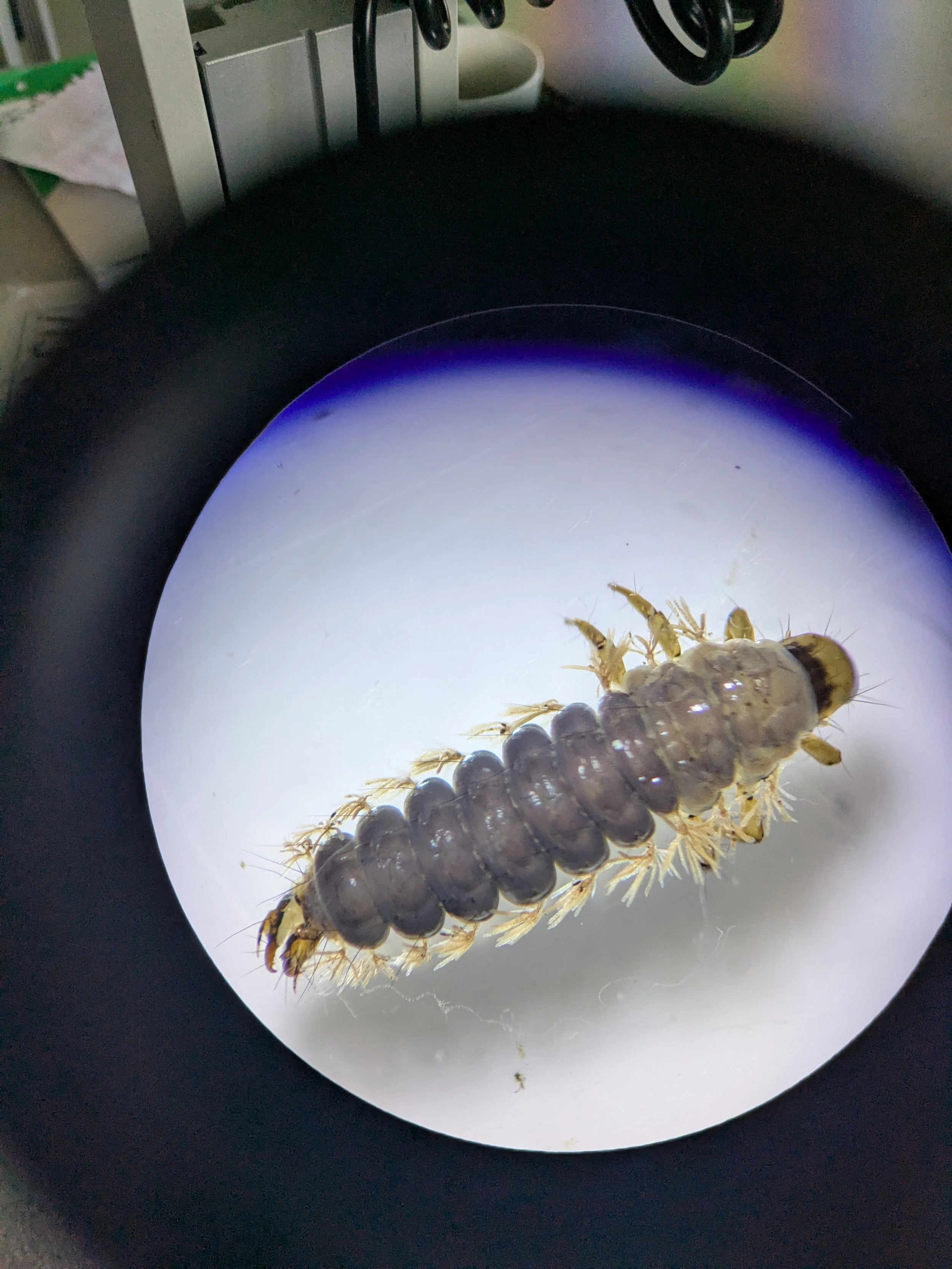
All of our sites showed good health throughout the river, including the presence of species that would be absent in areas with pollution or sediment pressures such as mayflies and caddisflies. These were both present at good levels, providing an important food source for wildlife.
Despite positive results, it’s important to understand that the river remains vulnerable. Our restoration efforts aim to improve its resilience from both current and future pressures.
Even rivers with ‘good’ scores have room for improvement. In our case, this may not be the return of missing species, but improving abundance.